
Our Team.
Our multidisciplinary team comprises scientists from various fields, including pharmacology, nanotechnology, molecular biology, and bioengineering, working collaboratively to advance innovative cancer treatments.

Flávia Sousa
Principal Investigator


Fatima Hameedat
PhD student

Federica Sarno
Postdoctoral researcher

Raquel Vilela
Postdoctoral researcher
FAPESP Awardee

Nathalie Schipper
MSc student

Andrea Ermigarate
MSc student

Delia Varaticeanu
MSc student

Norma Martín
Undergraduate student
Erasmus awardee

Gustavo Pacheco
MSc student
E + ICM Awardee

Rafaela Maia
Undergraduate student
FAPESP awardee

Antonella Barbiero
MSc student
Erasmus Awardee

Daniele Ferrera
MSc student
Erasmus awardee
Flávia Sousa
Flávia Sousa is a Tenure-Track Assistant Professor at the Department of Pharmaceutical Technology and Biopharmacy, Groningen Research Institute of Pharmacy, University of Groningen, Netherlands. She holds a background in pharmacy and earned her Ph.D. in Biomedical Sciences from the University of Porto, Portugal. Following her doctoral studies, Dr. Sousa pursued postdoctoral research at Imperial College London, subsequently securing a prestigious Marie Curie MINDED fellowship at the Istituto Italiano di Tecnologia, Italy (2021-2022), and an independent Women-in-Science (WINS) research fellowship from NCCR Bio-inspired Materials at the Adolphe Merkle Institute, Fribourg, Switzerland (2022-2024).
As a drug delivery scientist, Dr. Sousa is at the forefront of developing innovative biological nanotherapies for brain cancer treatment. Her pioneering research focuses on encapsulating anti-angiogenic monoclonal antibodies to enhance their efficacy in treating glioblastoma by normalizing tumor vasculature and the tumor microenvironment. Currently, she is advancing the development of a cancer nanovaccine for glioblastoma using state-of-the-art nanotechnology.
Dr. Sousa's groundbreaking work has led to promising advancements in brain cancer treatment, earning her numerous prestigious international grants, including the Fulbright program, the Marie-Sklodowska-Curie Fellowship, MIT Innovators Under 35, and the Female Science Talents initiative. Over the past five years, she has authored more than 40 publications, received 16 scientific awards from various countries, garnered over 2500 citations, and achieved an H-index of 26.

Education
2013 - Master in Pharmaceutical Sciences, IUCS, Portugal
2019- PhD in Biomedical Sciences, University of Porto, Portugal
Employment
2020 - Postdoc at Imperial College London, London, UK
2021 - MSCA fellow at Instituto Italiano di Tecnologia, Genova, Italy
2022 - Senior Researcher at Adolphe Merkle Instituto, Fribourg, Switzerland
2024 - Tenure-Track Assistant Professor at University of Groningen, Netherlands
Fatima Hameedat
I am a third-year PhD student who joined Dr. Flavia Sousa's laboratory in July 2023. It has been an absolute pleasure to move countries as part of her laboratory. During the PhD journey, we are focusing on gene and protein delivery to develop nanovaccines to treat Glioblastoma.
A brief introduction of myself, I obtained my Master's degree in Drug Delivery of Nanomedicine as part of the Erasmus Mundus joint master degree (EMJMD) in 2022, where I did an internship for 3-months in gene delivery at the University of Paris and a thesis internship for 6-months in protein delivery in i3s institute in University of Porto. In addition, I got my Bachelor's degree in Science of Pharmacy from Jordan University of Science and Technology in 2018. Before starting the academic journey, I worked in both a research laboratory and the community pharmacy to explore the pharmacy field, and my curiosity in nanomedicine guided me happily. Also, after my master's and before my PhD, I worked for a short time in the industry in the field of developing vaccines, and it encouraged me to continue my academic journey.
The PhD journey is not only about science in a closed laboratory, but also I am joining some scientific meetings from time to time; conferences, workshops, and seminars. I am also keen to know if I will reach other goals I set beside pursing the degree, is to improve my tennis and sewing skills, and hopefully, improving the leadership skills.

Raquel Vilela
I completed my PhD in Materials Science and Engineering at the University of São Paulo (EESC/USP), where I developed luminescent host-guest systems based on coordination compounds, with potential applications in photonics, bioimaging, and photodynamic therapy. I have built strong expertise in spectroscopy, nanomaterial synthesis, and physicochemical characterization techniques. I’m a physicist by training, my research has continuously evolved to embrace interdisciplinary challenges, bridging physics, chemistry, materials science– and more recently, biology.
My academic training includes two international research stays at the University of Münster, in Germany, where I worked on supramolecular assemblies and luminescent metal complexes within the context of advanced functional materials. Currently, my research focuses on the development of biomimetic nanoparticles coated with cell membranes for targeted drug delivery in glioblastoma multiforme (GBM). I’m a postdoctoral researcher in the Nanomedicine and Nanotoxicology Group at the Physics Institute of São Carlos, University of São Paulo (IFSC/USP), under the supervision of Prof. Valtencir Zucolotto.
As part of this project, I’m conducting a one-year research internship at the University of Groningen, under the supervision of Prof. Dr. Flavia Sousa, to develop an in vitro blood–brain barrier (BBB) model that reflects the complexity of brain tumors. This work, carried out in collaboration with Prof. Dr. Marina Trombetta, aims to enhance our understanding of BBB penetration and improve the therapeutic delivery of cell membrane-coated nanoparticles to the brain. Working in international, interdisciplinary environments continues to be a source of inspiration for me. I am driven by the opportunity to address complex challenges through innovative nanotechnological strategies, and I’m always open to new collaborations and ideas that push the boundaries of science.

Federica Sarno
I am a biomedical scientist with a PhD in Biochemistry, Biophysics and General Pathology, with extensive expertise in cancer biology, epigenetic regulation, and CRISPR-based epigenetic modulation. My research focuses on understanding tumor-related molecular mechanisms and developing innovative strategies to modulate gene expression for therapeutic purposes.
I did the postdoctoral researcher at the University Medical Center Groningen (UMCG), where I worked on epigenetic editing approaches based on CRISPR/dCas9 technology to regulate cancer-related genes, to better understand how epigenetic mechanisms drive tumor progression and therapy response, with the long-term goal of developing novel therapeutic strategies.
I completed my PhD at the University of Campania “Luigi Vanvitelli” (Italy), where my research focused on the development and characterization of novel epigenetic compounds for cancer therapy. This work combined computational approaches, biochemical and enzymatic assays, and in vitro cancer models to investigate the mechanisms of action of anticancer agents across different tumor types.
Alongside my academic research, I am also an Academic Managing Editor for the Springer Nature journals, where I contribute to the peer-review process and editorial activities. I am also involved in the Italian biotech spin-off Epi-C, which focuses on the development of epigenetic compounds and biomarkers for cancer diagnosis and prognosis.
Overall, my research lies at the intersection of molecular biology, epigenetics, and translational oncology, with the aim of advancing innovative strategies for cancer treatment.

Nathalie Schipper
I am a second year Master’s student of Pharmacy at the University of Groningen. For my thesis project, I will join Dr. Flávia Sousa’s research group to explore drug delivery strategies that cross the blood–brain barrier, aiming to advance treatment options for Glioblastoma Multiforme. This project is an opportunity to deepen my skills in experimental design, analytical methods and nanomedicine.
During my studies, I broadened my study beyond the core curriculum. I completed an extracurricular minor in Health and Technology Law to understand the regulatory and ethical steps that shape translation from bench to bedside. I also worked in a community pharmacy, which strengthened my practical insight into medicines and patient needs and I received extensive laboratory training across multiple courses. These experiences made me keen to contribute to research with real clinical impact.
I’m a curious and disciplined learner who enjoys collaborative environments and exchanging ideas. I look forward to contributing to a dynamic, young, and female-led research group and to grow as a researcher in this environment.

Andrea Ermigarate
I am a first-year Master's student in Medical Pharmaceutical Sciences at the University of Groningen. In January 2026, I joined the laboratory of Dr. Flavia Sousa to carry out my first research project. My project focuses on the optimization of lipid nanoparticles to deliver anti-telomerase oligonucleotides for combination therapies against glioblastoma resistance.
Prior to starting my Master's studies, I graduated in 2025 with a Bachelor’s degree in Biochemistry with a specialization in Biomedicine from the University of Navarra (Spain). During my undergraduate studies, I completed my Bachelor’s thesis on tumor stem cells as therapeutic targets for the treatment of glioblastoma. Through this project, I developed a strong interest in emerging therapeutic approaches such as gene therapies and immunotherapies, and in how these alternative treatments have revolutionized biomedical research in recent years. For this reason, when I learned about Dr. Sousa’s research group and their work, I did not hesitate to contact them. Their outstanding contributions to the field of nanomedicine immediately caught my attention. However, what I appreciate most about working in this laboratory is the collaborative and supportive environment within the team.
These past months have given me the opportunity to grow both personally and professionally, allowing me to explore firsthand the fascinating field of nanomedicine, which was previously unfamiliar to me. I have always been a very curious person, and the daily learning experience in the laboratory is helping me better understand how I would like to shape my future scientific career.

Delia Varaticeanu
I am a Master’s student in Biomedical Sciences at the University of Groningen, following the Neuroscience track. I previously obtained my Bachelor’s degree in Pharmacy from the University of Groningen, where I developed a strong interest in neurobiology and drug delivery strategies for neurological diseases.
During my Bachelor’s studies, I completed a six-month research minor investigating the neuroprotective potential of extracellular vesicles in ferroptosis-driven neurodegeneration. This experience allowed me to gain hands-on lab skills while exploring mechanisms of neuronal injury and protection.
For my Bachelor’s thesis, conducted under the supervision of Dr. Flávia Sousa, I carried out a literature review on injectable in situ hyaluronic acid-based hydrogels as a platform for sustained drug delivery targeting glioblastoma. During this project, I had the opportunity to closely observe the research environment within Dr. Sousa’s group and interact with members of the lab. This experience sparked my interest in nanomedicine and brain cancer research and motivated me to pursue my Master’s research project in her lab. Currently, my research focuses on developing nanoparticle-based delivery systems for RNA therapeutics aimed at modulating immune responses against glioblastoma. I am particularly interested in how these delivery strategies can be used to overcome biological barriers, such as the blood–brain barrier, to enable more effective treatments for brain tumors.
What I value most about working in this particular laboratory is the collaborative and supportive environment, where researchers from different backgrounds come together to tackle complex scientific challenges. Being surrounded by motivated scientists has been a strong source of inspiration and has encouraged me to further develop my skills and scientific identity.
Outside the laboratory, I enjoy solving puzzles, going for long walks, and crocheting.
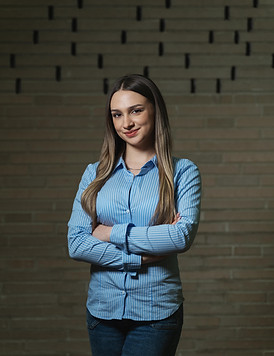
Norma Martín
I am a final-year Biomedical Sciences student at the University of Barcelona, where my academic training has focused on the intersection between biology, medicine, and emerging biomedical technologies.
Throughout my studies, I have developed a strong interest in nanomedicine, drug delivery systems, and translational biomedical research aimed at improving therapeutic strategies.
Currently, I am undertaking a research internship from February to June under the daily supervision of Fatima Hameedat. During this internship, my work focuses on the development and optimization of polymeric nanoparticle systems for vaccine delivery. This experience is allowing me to strengthen my experimental and analytical skills while exploring the potential of nanotechnology to improve vaccine delivery and immunotherapeutic approaches.
As I approach the completion of my undergraduate studies, I am eager to continue expanding my research experience and contributing to innovative strategies in nanomedicine and biomedical science.

Gustavo Pacheco
I am a second-year Master’s student in Biochemical Sciences at the Faculty of Chemistry at the National Autonomous University of Mexico (UNAM) in Mexico City.
I obtained my Bachelor’s degree in Biological Engineering from the Universidad Autónoma Metropolitana (UAM), also in Mexico City. During my undergraduate studies, I completed a six-month research stay at the Institute for Research in Cell Therapy at the University of Duisburg-Essen in Germany. My early training focused on membrane models to study interactions between biomolecules and phospholipids. After graduating, I spent five months at the Institute of Biomedical Research at UNAM, where I trained in experimental neurosurgery.
I am currently developing polymeric nanoparticles designed to improve transport across the blood–brain barrier (BBB). I am particularly interested in menthol as a potential modulator of the BBB that could enhance the delivery of nanosystems to the brain. This project brings together several of my main interests: biological barriers, neuroscience, and nanotechnology.
With the goal of expanding this work, I contacted Dr. Sousa to explore testing these nanoparticles using her in vitro BBB model. I was recently awarded an Erasmus+ scholarship, which will support my research stay in her group from April to June 2026. I am very excited about the opportunity to learn from talented researchers and to further develop my thesis in a highly competitive research environment.
Outside the lab, I enjoy electronic music and occasionally produce and share my own music online. I also have a strong interest in the philosophy of science.

Rafaela Maia
I am a final year Biomedical Science student at the University of São Paulo (ICB/USP) and, for 3 months, I will be joining Dr. Flávia Sousa’s laboratory for an international internship. For this time period we will focus on immunomodulation of glioblastoma tumor environment.
During my Bachelor’s degree I was introduced to the nanomedicine filed in Dr. Luciana Lopes’ laboratory, where I started my research optimizing polymeric nanoparticles for the encapsulation of a hydrophobic compound, that is cytotoxic for melanoma. As a way to broaden my horizons, I am very excited to be able to face other challenges, learn new techniques and deepen my knowledge in nanotechnology abroad.
It is my first time in Europe, so I am very happy to come to Groningen, be in touch with another culture and also explore new flavors, since culinary is a hobby of mine, but also see the beautiful tulips.

Antonella Barbiero
I obtained my Master’s degree in Pharmacy from the University of Chieti–Pescara in Italy. During my studies, I had the opportunity to spend one year abroad as an Erasmus student at the University of Porto in Portugal. This experience allowed me to broaden both my academic and cultural perspectives while studying in an international environment.
I completed my studies with a thesis focused on the role of nutrition in Alzheimer’s disease and brain aging. Through this work, I developed a strong interest in understanding how lifestyle and biological factors can influence neurodegenerative processes and overall brain health.
I am currently in Groningen for my Erasmus traineeship project, where I am working under the supervision of Dr. Flávia Sousa and Prof. Helder Santos. My research focuses on the production of nanoparticles for the treatment of cardiac fibrosis. This project allows me to explore nanomedicine approaches and their potential in developing innovative therapeutic strategies for complex diseases.
What I enjoy most about working in the laboratory is the opportunity to face scientific challenges, solve problems, and search for possible solutions to difficult pathologies. I particularly appreciate a work environment that is calm, supportive, and collaborative, where researchers can work seriously while also maintaining a positive and friendly atmosphere.

Daniele Ferrera
I recently graduated in Pharmacy from the University “Gabriele d’Annunzio” of Chieti–Pescara, where my academic path allowed me to develop a strong background in pharmaceutical sciences and medicinal chemistry.
During my studies, I became particularly interested in scientific research, as it offers the opportunity to develop essential skills such as critical thinking, problem solving, and effective teamwork within multidisciplinary environments. My final thesis focused on the triazole scaffold and its therapeutic applications, exploring the relevance of this heterocyclic structure in medicinal chemistry and its role in the development of bioactive compounds.
Currently, I am undertaking a research internship in Groningen from February to July, where I am involved in a project aimed at developing nanoparticle-based systems for the treatment of cardiac fibrosis. I am working under supervision of Prof. Santos and Dr. Flavia Sousa, gaining hands-on experience in nanomedicine and experimental research.
Following my graduation, I am eager to continue pursuing a career in scientific research, with the goal of contributing to the development of innovative therapeutic strategies and advancing biomedical science.
